Език & Валута:
    / BGN
    Език
    Валута
    • EUR
    • BGN
    0
    Език & Валута:
    / BGN
    Език
    Валута
    • EUR
    • BGN
    •    

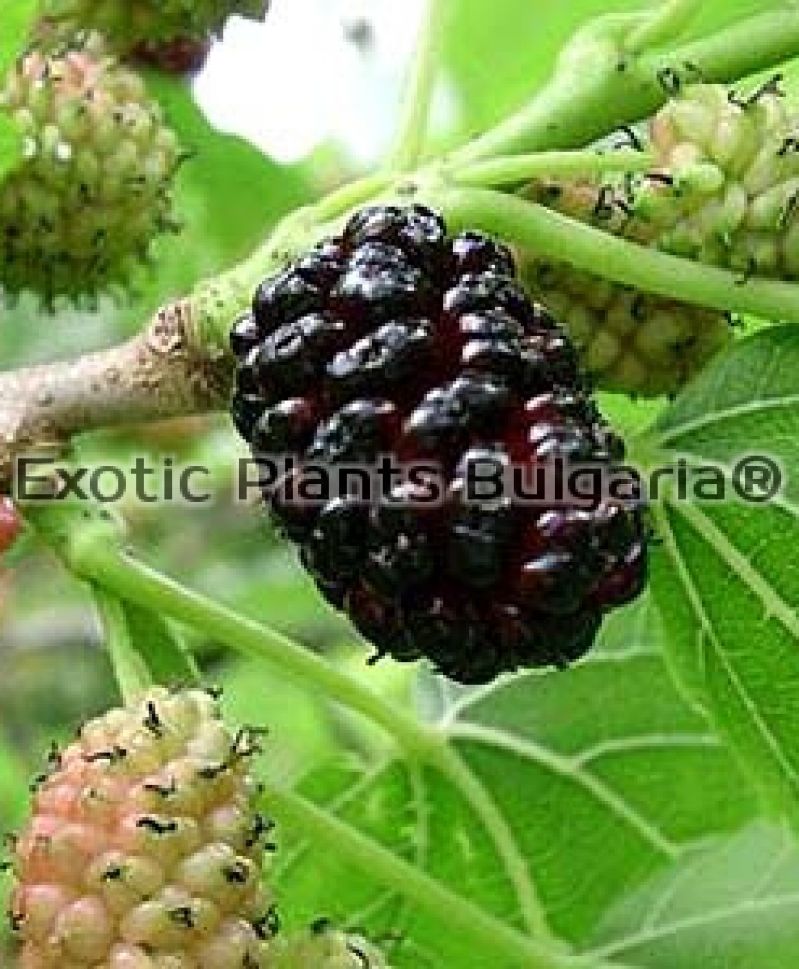
    Persian Fruiting Mulberry

    Цена: 13.00лв. €6.65

    Временно изчерпана наличност

    Morus Nigra - гарантирано от Plandorex

    MORUS Nigra 1/1 45/60

    Morus nigra - L.                  
                     
    Common Name Black Mulberry
    Family Moraceae
    Synonyms  
    Known Hazards None known
    Habitats Original habitat is obscure.
    Range W. Asia?
    Edibility Rating  
    Medicinal Rating  
    Care
    Fully Hardy Moist Soil Semi-shade Full sun
     
    Summary       
     
     
    Physical Characteristics       
     icon of manicon of lolypop
    Morus nigra is a deciduous Tree growing to 10 m (32ft) by 15 m (49ft) at a slow rate.
    It is hardy to zone (UK) 5. It is in flower from May to June, and the seeds ripen from Aug to September. The flowers are monoecious (individual flowers are either male or female, but both sexes can be found on the same plant)The plant is self-fertile.


    USDA hardiness zone : 5-9


    Suitable for: light (sandy), medium (loamy) and heavy (clay) soils and prefers well-drained soil. Suitable pH: acid, neutral and basic (alkaline) soils. It can grow in semi-shade (light woodland) or no shade. It prefers moist soil. It can tolerate atmospheric pollution.

    Morus nigra Black Mulberry


    Morus nigra Black Mulberry
     
       
    Habitats       
    Woodland Garden Canopy; Secondary; Sunny Edge; Dappled Shade;
    Edible Uses                                         
    Edible Parts: Fruit.
    Edible Uses:

    Fruit - raw, cooked or used in preserves[1, 2, 3, 4, 7, 9, 183]. A delicious slightly acid flavour, it makes an excellent dessert fruit and can be eaten in quantity[K]. The fruit is juicy and refreshing, though it must be used as soon as it is ripe (from mid-August to September) otherwise it will start to rot[200]. The fruit falls from the tree as soon as it is fully ripe. It is best, therefore, to grow the tree in short grass to cushion the fall of the fruit but to still make it possible to find and harvest[K]. The fruit can also be dried and ground into a powder[183]. The fruit is up to 25mm in diameter[200, 227].